Nearby Locations
Explore ancient ruins, sacred temples, and scenic landmarks around Polonnaruwa, with distances and visitor guides from ISARA Residence.
Historical Heritage
Polonnaruwa Landmark Guides
Each attraction below features historical details, photography, estimated travel times from ISARA Residence, and practical visitor tips.
Deepa Uyana
Deepa Uyana, or "Island Garden," is a historical pleasure garden located on the promontory of the Parakrama Samudra. Attributed to the reign of King Parakramabahu I (1153–1186 AD), this tranquil area was once part of the royal complex designed for leisure and retreat. Although few ancient structures remain, its strategic position jutting into the "Sea of Parakrama" offers breathtaking views of the massive reservoir, itself a testament to ancient hydraulic engineering. It serves as a serene reminder of the city's golden age when water management and landscape architecture flourished together.
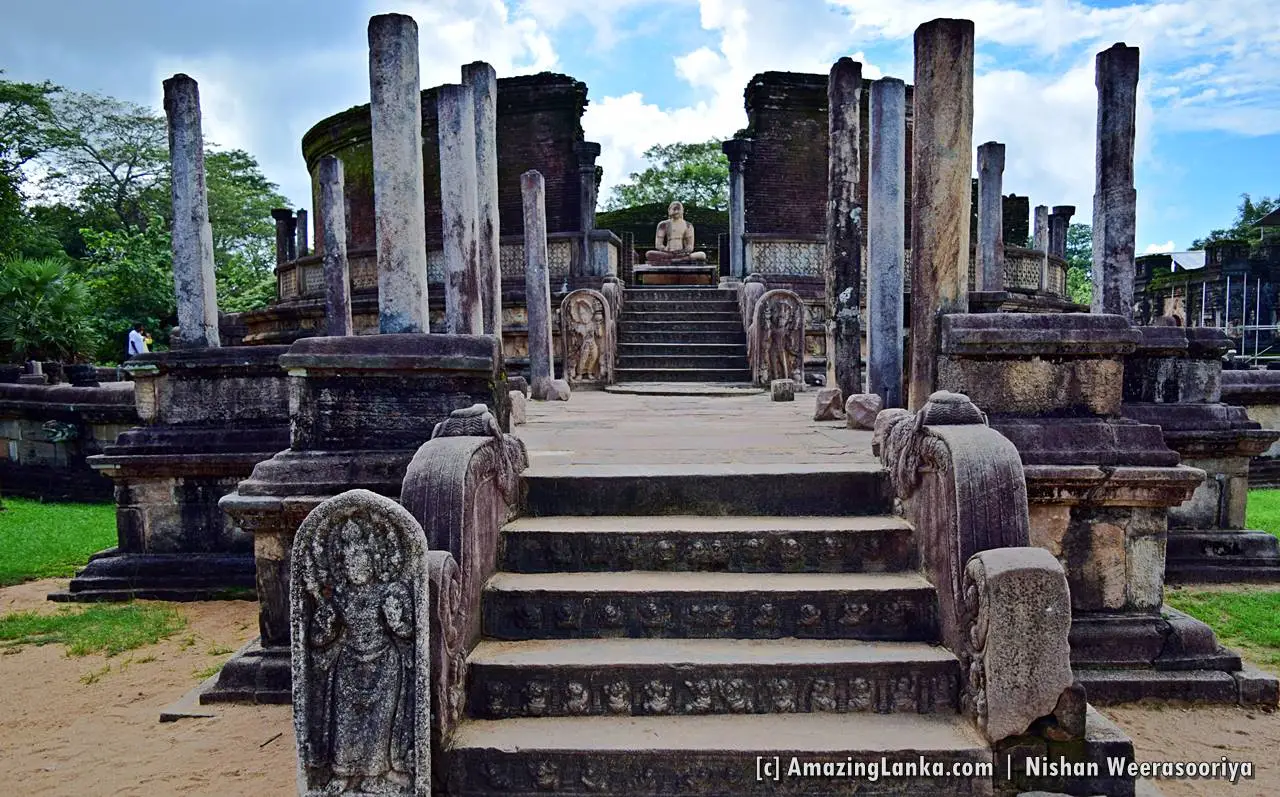
Polonnaruwa Vatadage
The Polonnaruwa Vatadage is a masterpiece of ancient Sri Lankan architecture, situated within the Dalada Maluwa (Tooth Relic Terrace). Believed to be built by King Parakramabahu I and later embellished by King Nissanka Malla, this circular relic house was designed to protect the sacred Tooth Relic of the Buddha. The structure features concentric stone terraces with intricate moonstones, guardstones, and four seated Buddha statues facing the cardinal directions. Its artistic stone carvings are considered some of the finest in the country, symbolizing the spiritual heart of the ancient kingdom.
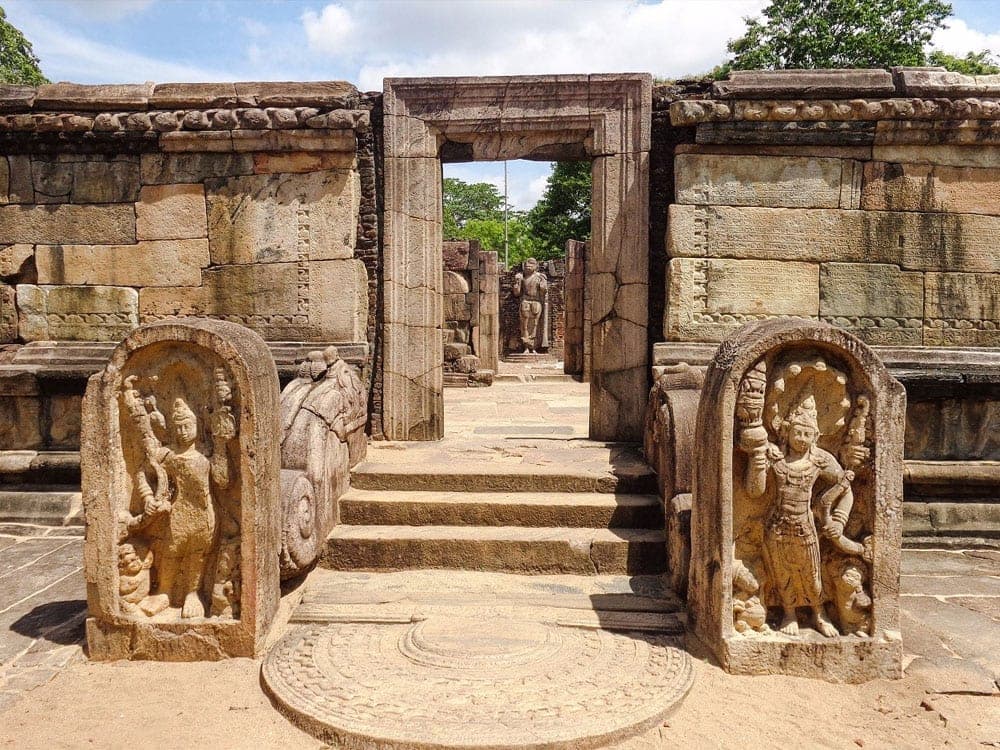
Hatadage
The Hatadage, built by King Nissanka Malla (1187–1196 AD), is an ancient relic shrine named for the tradition that it was constructed in sixty (hata) hours. Located directly opposite the Vatadage, it once housed the Sacred Tooth Relic. The walls consist of massive stone slabs, originally adorned with wood and clay superstructures. Near its entrance lies the "Gal Pota" (Stone Book), a massive stone inscription describing the king's virtues and lineage, further emphasizing the site's historical significance as a center of royal power and piety.
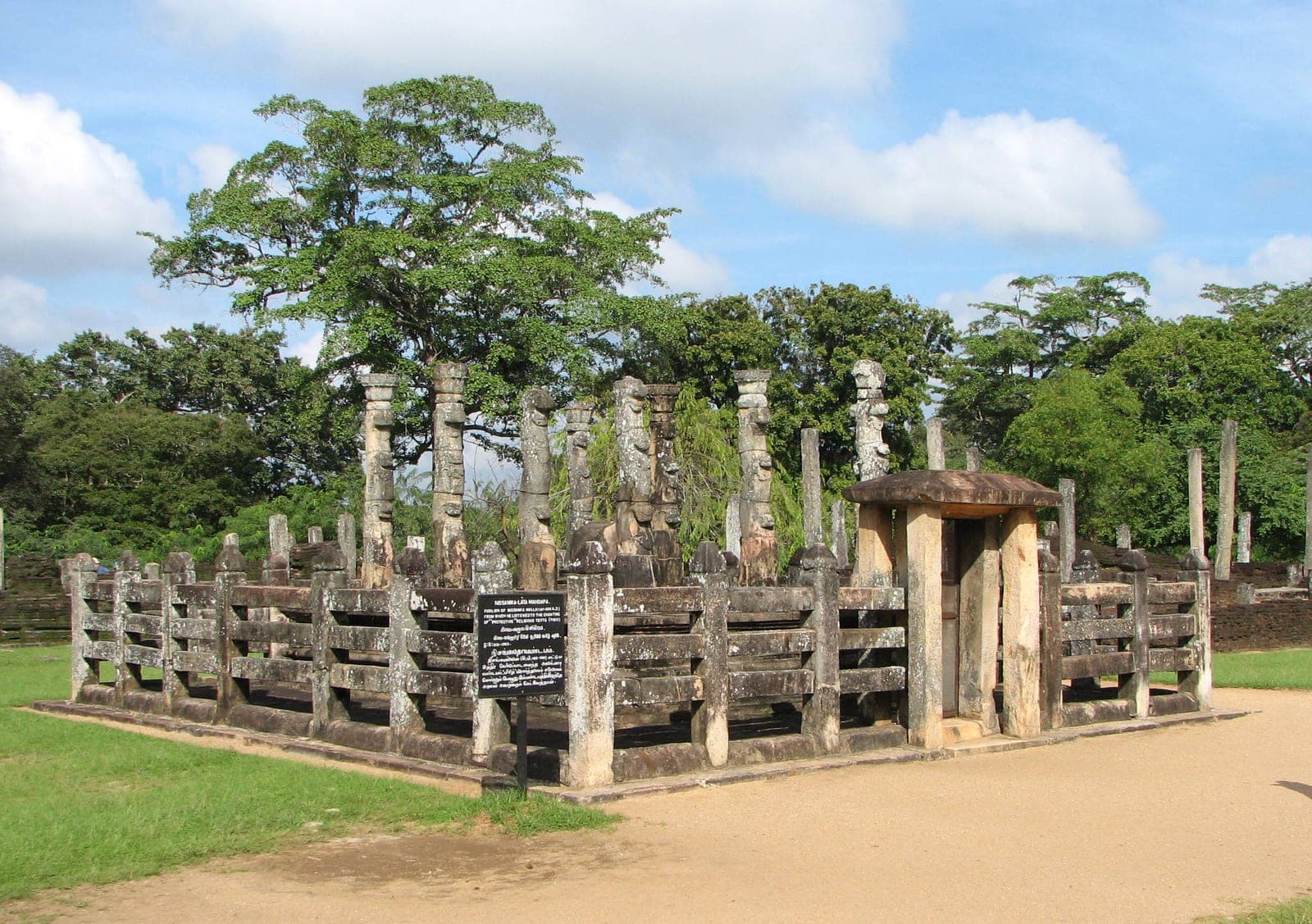
Nissanka Latha Mandapaya
The Nissanka Latha Mandapaya is a unique structure built by King Nissanka Malla for listening to the chanting of Pirith (Buddhist scriptures). Unlike traditional solid columns, the stone pillars here are carved to resemble lotus stalks, swaying gently in the breeze, crowned with budding lotus capitals. This architectural marvel sits within a stone railing and showcases the king's penchant for flamboyant and distinct artistic styles, deviating from the classic Anuradhapura tradition to create something truly ornamental.
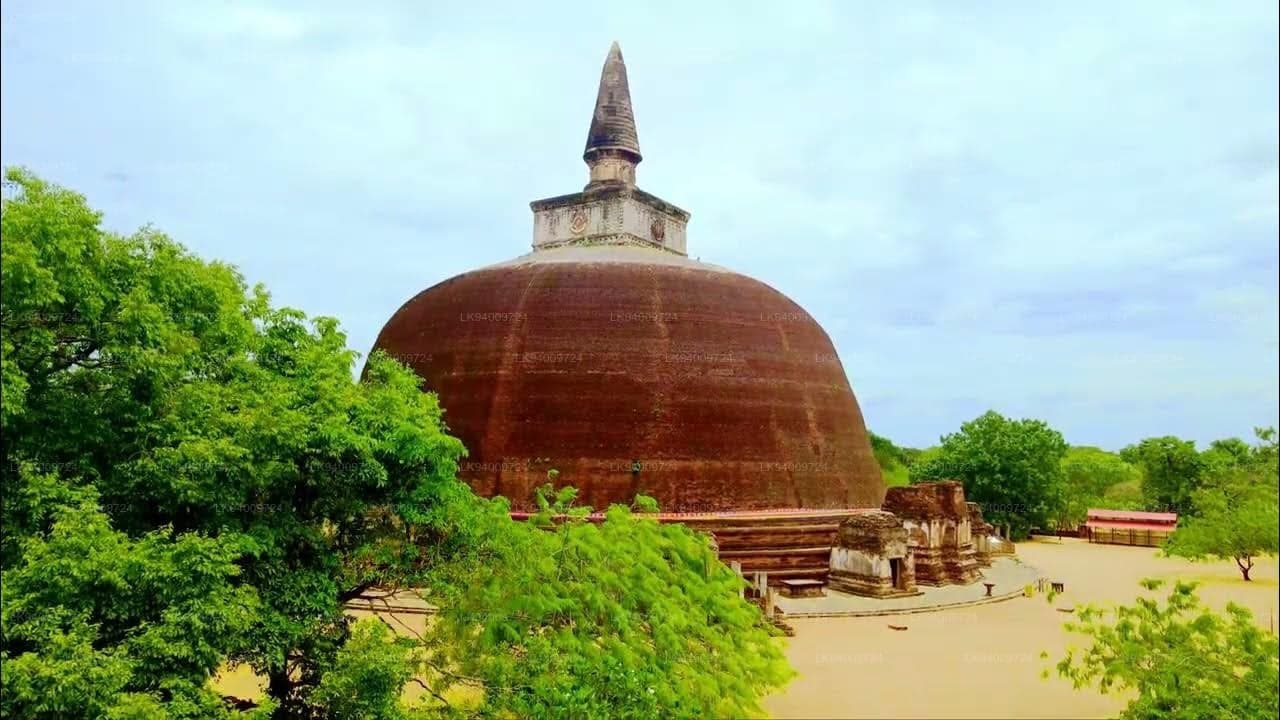
Rankoth Vehera
Rankoth Vehera is the largest stupa in Polonnaruwa and the fourth largest in Sri Lanka, constructed by King Nissanka Malla. Modeling it after the colossal Ruwanwelisaya in Anuradhapura, the king named it "Ruwanveli," though it is now known as Rankoth Vehera ("Gold Pinnacled Stupa"). Rising 55 meters high, this brick structure is surrounded by four vahalkadas (frontispieces) and numerous smaller shrines. Inscriptions near one of the vahalkadas record the king's supervision of the construction, seated on a stone platform to watch his work rise.
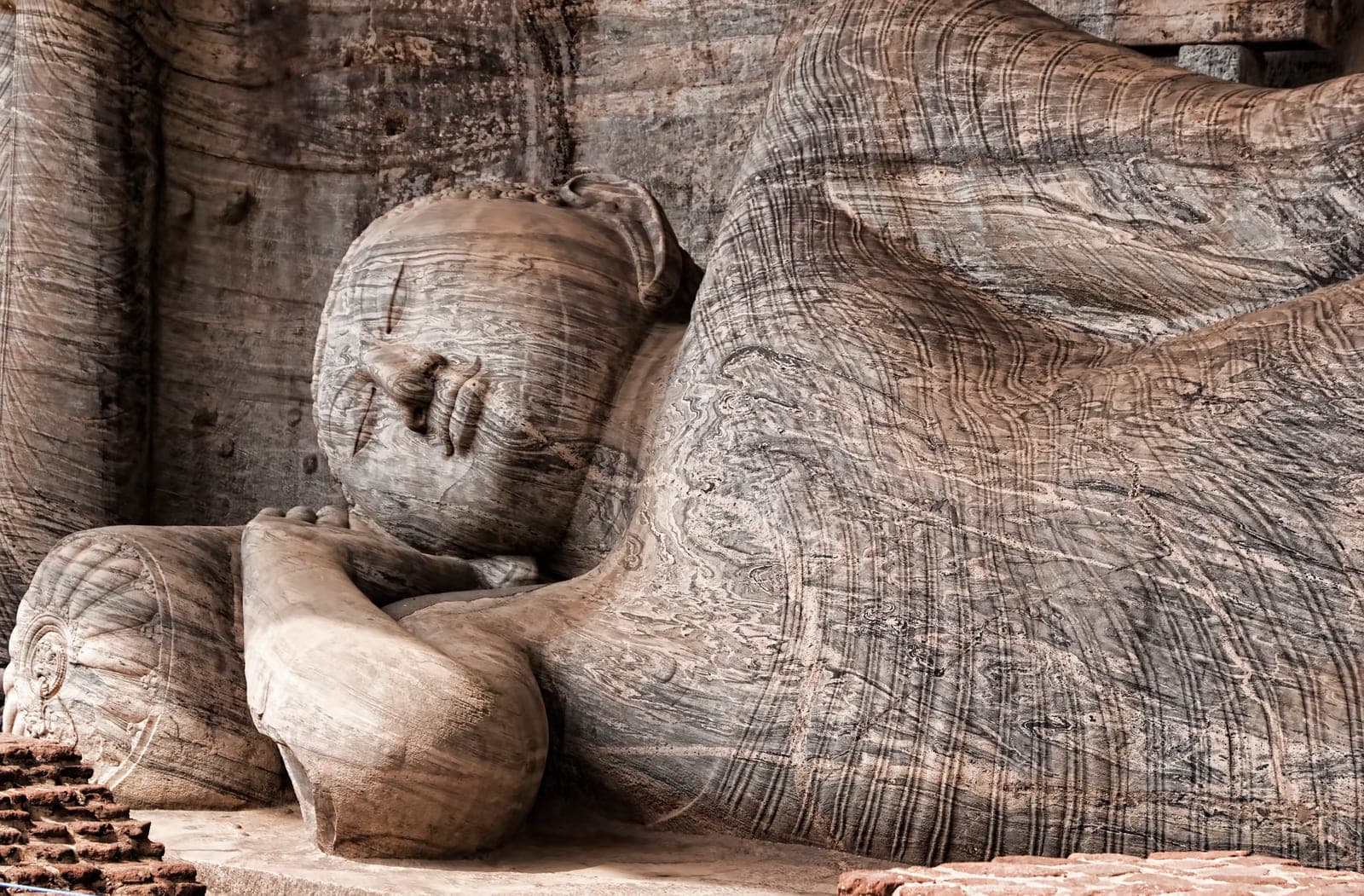
Gal Vihara
Gal Vihara, originally named Uttararama, is the pinnacle of Sinhalese rock carving, commissioned by King Parakramabahu I. The site features four magnificent Buddha statues carved from a single face of granite gneiss: a large seated Buddha in meditation, a smaller seated Buddha inside a cave (Vidyadhara Guha), a standing Buddha with crossed arms (often debated as Ananda Thero, but likely the Buddha himself representing sorrow or enlightenment), and a colossal 14-meter reclining Buddha depicting the Parinirvana. These masterpieces capture profound serenity and are globally renowned for their fluidity and detail.
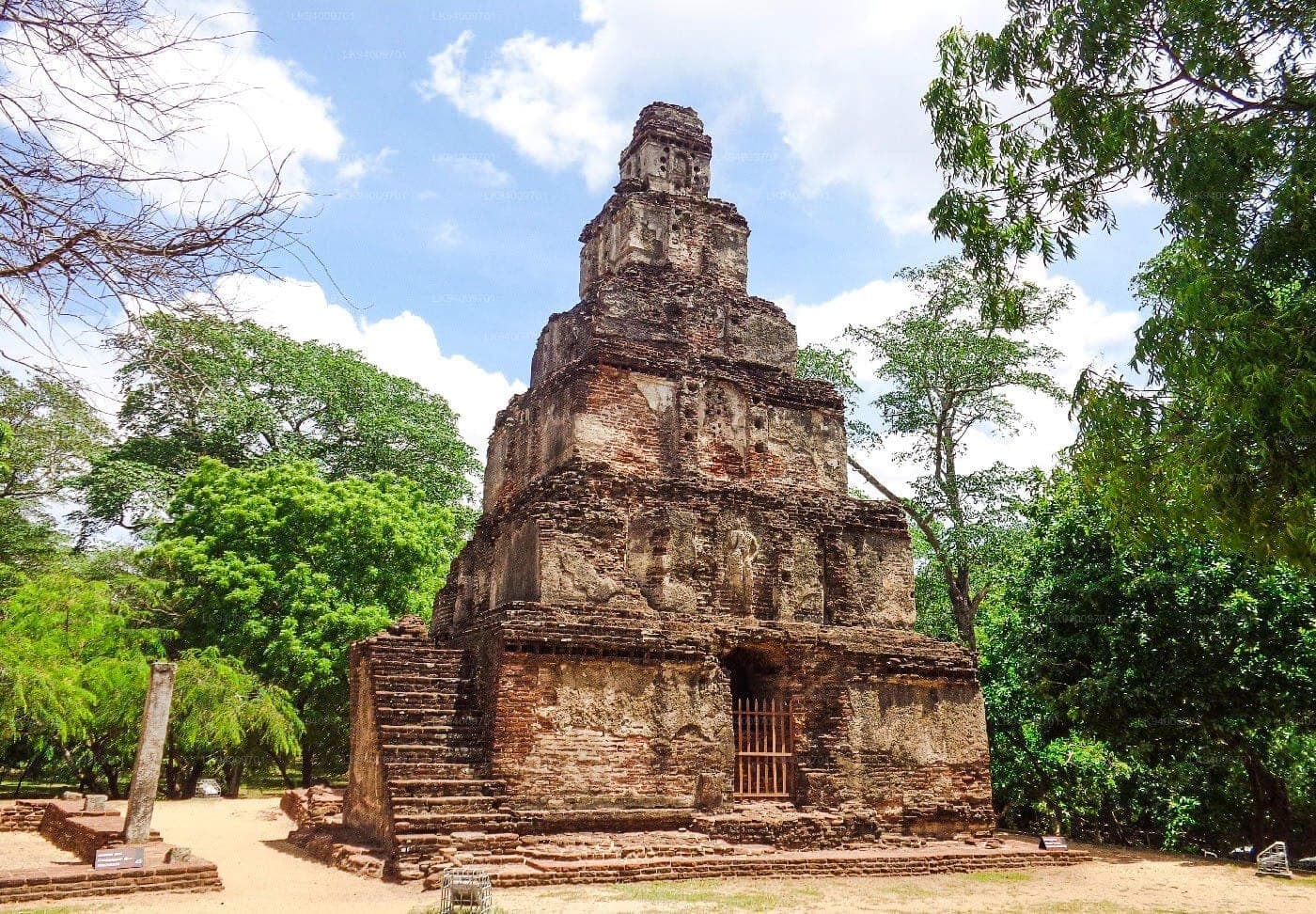
Satmahal Prasada
Satmahal Prasada is a rare seven-storied stepped pyramid located in the Dalada Maluwa sector. Its unusual design differs significantly from traditional Sri Lankan stupas, resembling architectural styles found in Cambodia (Wat Kukut) or Thailand (Wat Cham Thewi). This suggests strong cultural or diplomatic links between Polonnaruwa and Southeast Asian kingdoms during the 12th century. Though its original function remains a mystery, it is believed to be a stupa enshrining relics, with each diminishing story originally adorned with deity figures.
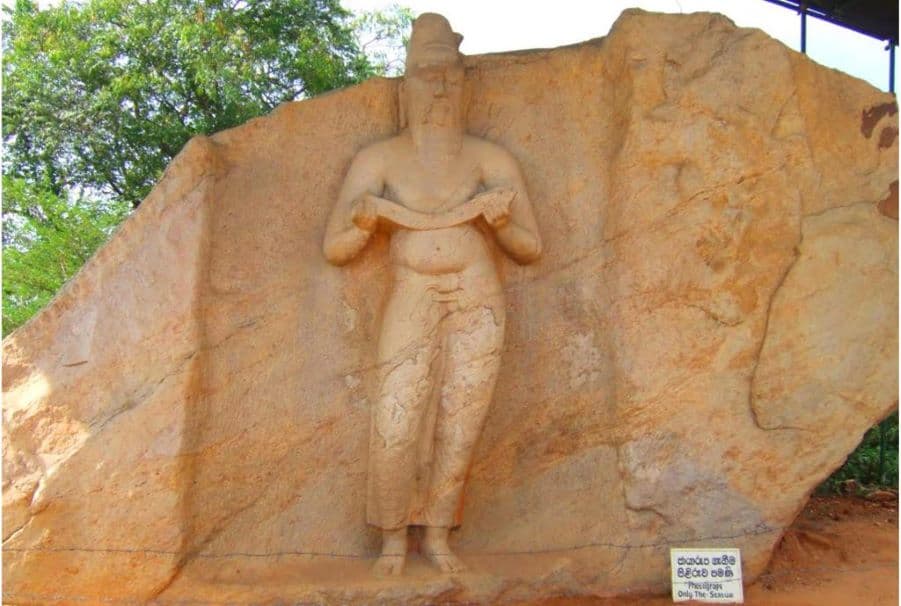
Statue of Parakramabahu I
Standing near the Potgul Vehera, this iconic 12th-century stone statue is popularly believed to depict King Parakramabahu I, the great builder of Polonnaruwa. The figure, carved into a rock boulder, holds an object that resembles a yoke (symbolizing sovereignty) or an ola-leaf manuscript (symbolizing scholarship). Standing 11.5 feet tall, the statue radiates majesty, strength, and dignity. Some scholars argue it represents a sage like Pulasti or Agastya, but its royal bearing and proximity to the king's works keep the popular legend alive.
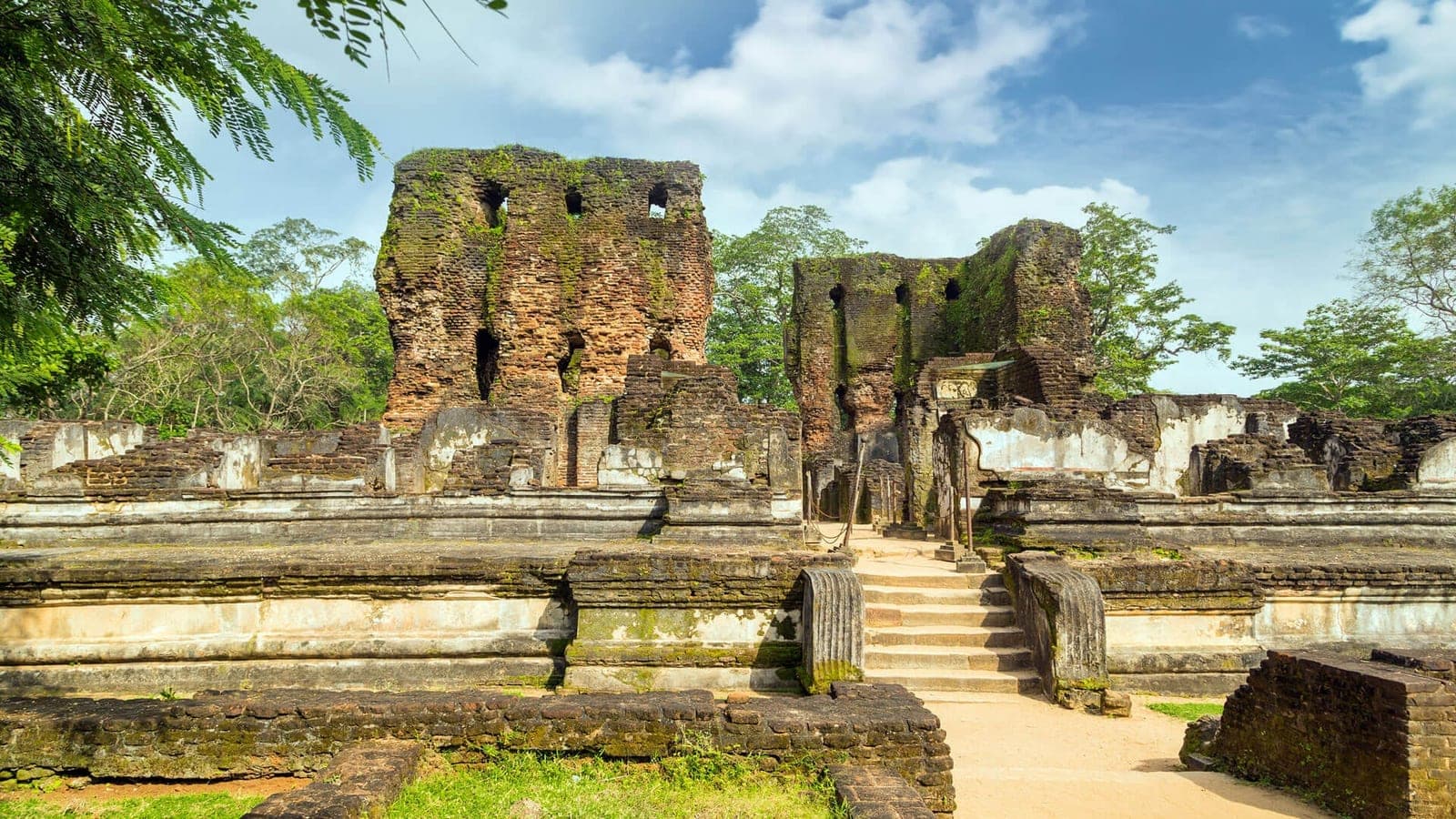
Royal Palace
The Royal Palace of King Parakramabahu I, known as the "Palace of Seven Stories" (Vaijayanta Prasada), was once a colossal structure with a thousand chambers, according to the Chronicles. Today, massive brick walls of three stories remain, hinting at its original grandeur. The complex included spacious halls and likely had wooden upper floors that were destroyed by fire during the invasion of Kalinga Magha. The thick walls preserve traces of plaster and holes for floor beams, offering a glimpse into the immense scale of medieval royal living.
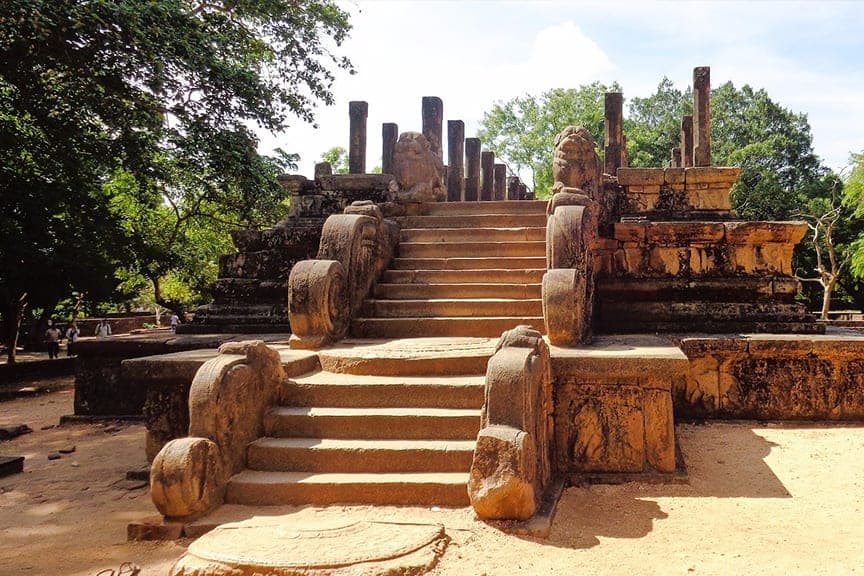
Council Chamber
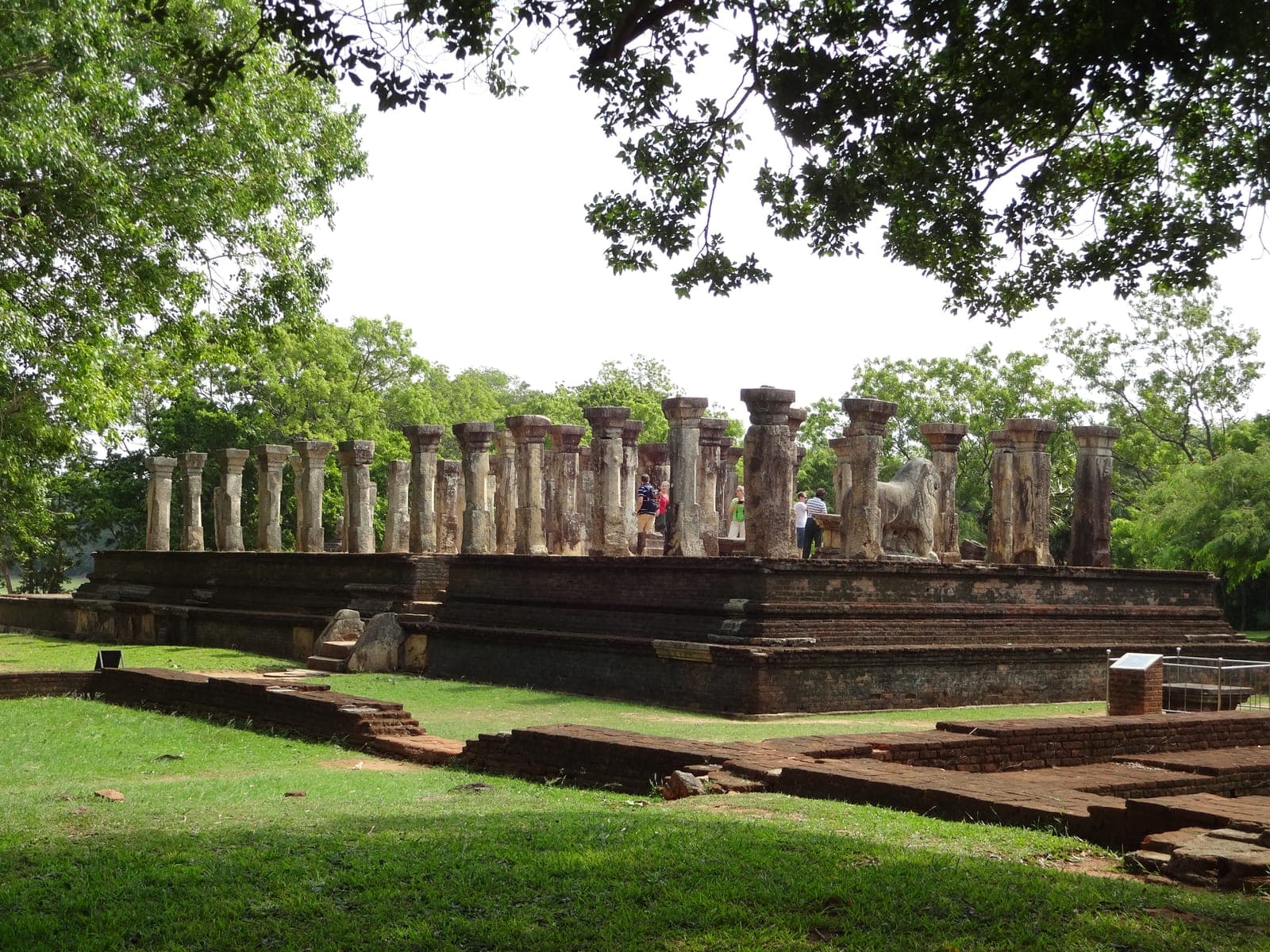
The Council Chamber of King Parakramabahu I is a rectangular structure situated on a high stone platform in front of the Royal Palace. It served as the king's audience hall for state affairs. The base is adorned with friezes of elephants, lions, and dwarfs. The entrance is guarded by two beautiful lion statues. The roof was once supported by stone pillars which remain today; historically, ministers sat at specific pillars assigned by rank, showcasing the organized administrative hierarchy of the Polonnaruwa kingdom.
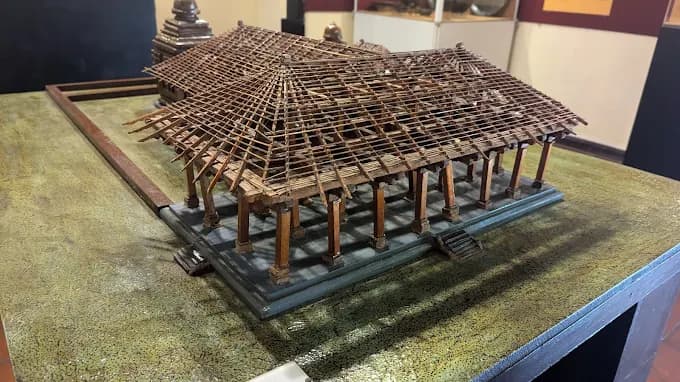
Archaeological Museum
The Polonnaruwa Archaeological Museum is an essential starting point for any visit, located near the Parakrama Samudra rest house. It houses a rich collection of artifacts recovered from the ancient city, including surgical instruments, bronze statues of Hindu deities (evidence of religious tolerance and Chola influence), ceramic items, and architectural models. The museum provides context to the ruins, displaying reconstructions of how the massive buildings like the Royal Palace and Thuparama might have looked in their prime.
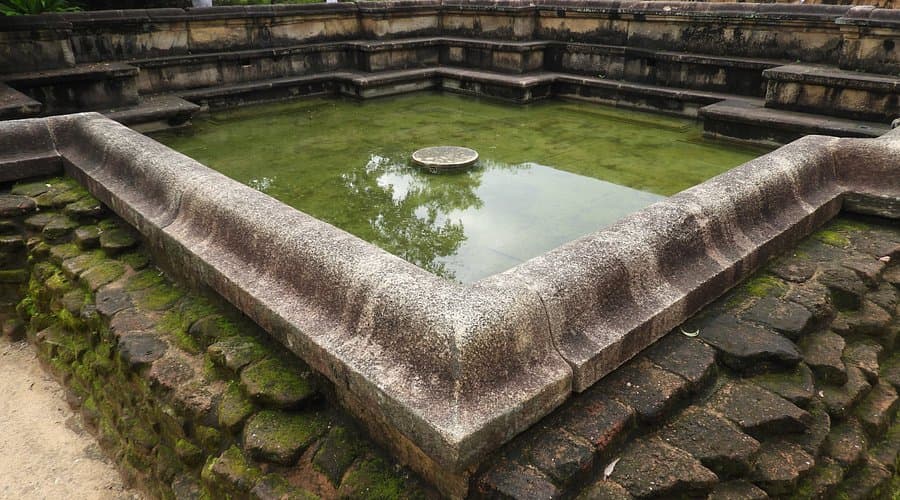
Kumara Pokuna
Located just outside the royal citadel, Kumara Pokuna ("Prince's Pond") was the royal bath constructed by King Parakramabahu I. The pond is designed in a geometric shape with stepped sides leading down to the water. Fresh water was channeled from the canal through dragon-mouthed spouts (makara sohi), showcasing the sophisticated hydraulic network that cooled the water before it entered the bath. Adjacent to the pond are the ruins of a changing room, reflecting the luxury and attention to detail in royal life.
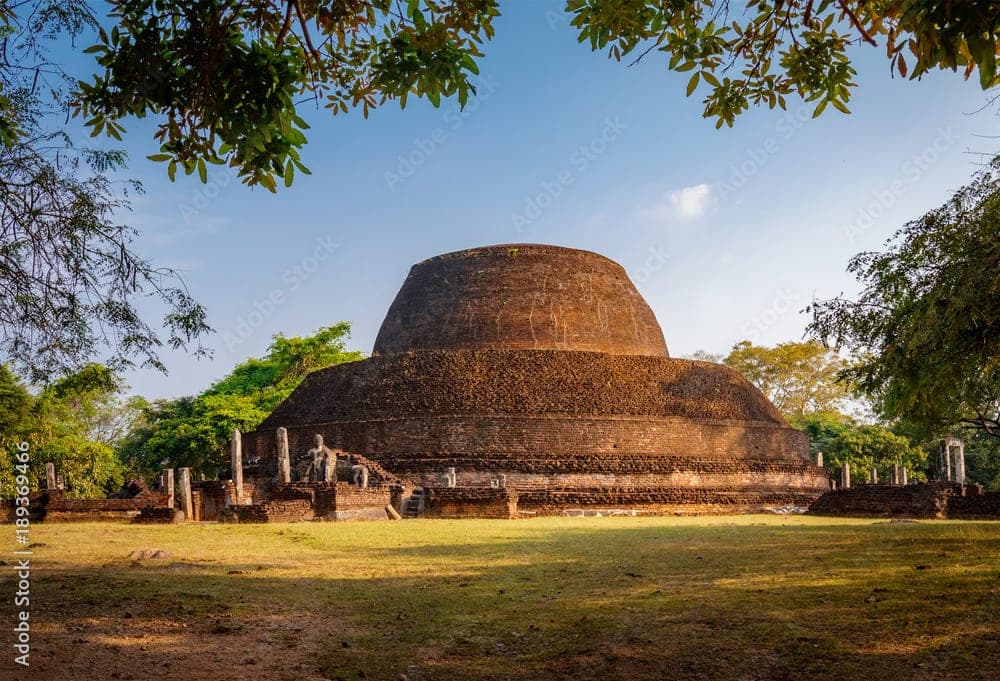
Pabalu Vehera
Pabalu Vehera is a stupa traditionally attributed to Queen Rupavati, one of the consorts of King Parakramabahu I. Its name, "Bead Stupa," possibly derives from the many glass beads found in the vicinity during excavations. The structure is unique for its extensive use of brick and its slightly different shape compared to other stupas in the complex. It stands as a testament to the patronage of royal women in the religious landscape of medieval Sri Lanka.
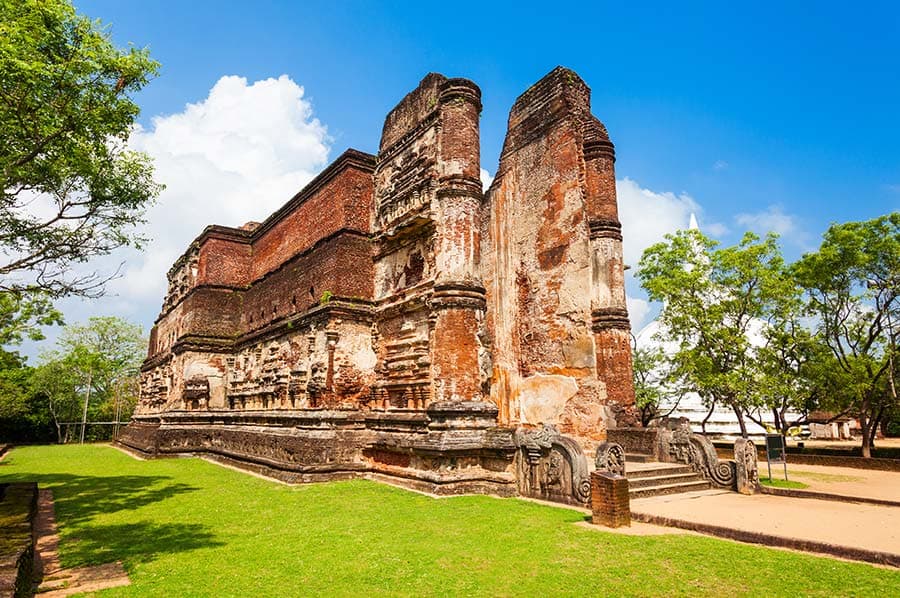
Lankatilaka Temple
Lankatilaka is a massive "Gedige" style image house built by King Parakramabahu I. It is renowned for its towering brick walls, which originally stood possibly five stories high. Inside, a colossal standing Buddha statue (now headless) dominates the narrow aisle. The exterior walls are decorated with elaborate stucco figures of deities and architectural motifs. Even in its ruined state, Lankatilaka evokes a sense of awe, being one of the largest religious edifices of the Polonnaruwa period.
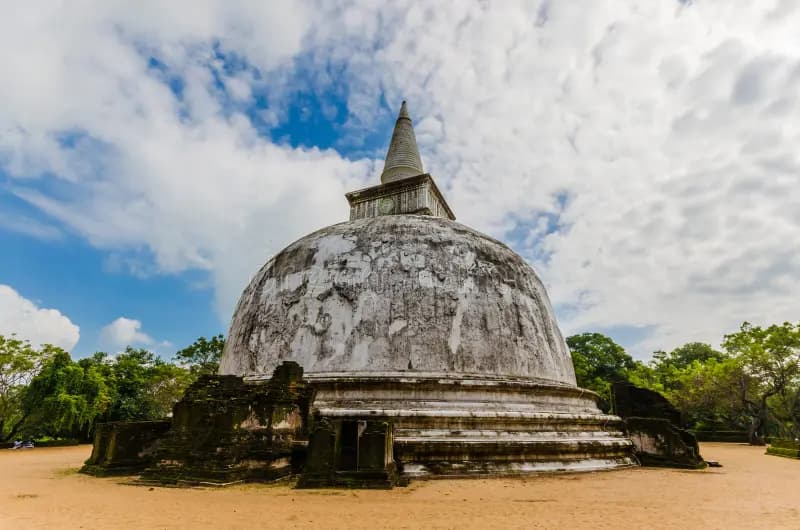
Kiri Vehera (Polonnaruwa)
Kiri Vehera is the second largest stupa in Polonnaruwa and is the best-preserved unrestored stupa in Sri Lanka. It dates back to the reign of King Parakramabahu I and is believed to have been built by his queen, Subhadra. The original lime plaster remains largely intact, giving it a milky white appearance, hence the name "Milk Stupa." It was originally known as "Rupa Vehera." Its pristine condition provides the clearest picture of what these ancient domes looked like centuries ago.
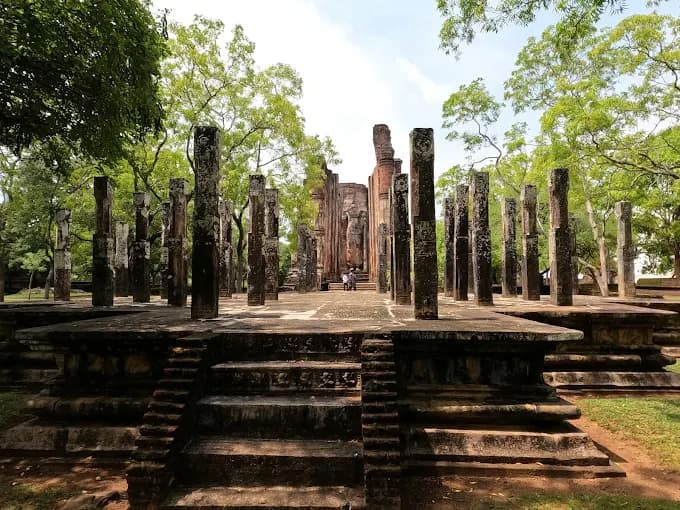
Alahana Pirivena
Spanning over 80 hectares, the Alahana Pirivena was the largest monastic university complex in Polonnaruwa, established by King Parakramabahu I. The name implies "Cremation Monastery," as it was built on ground previously used for royal funerals. The site includes the Lankatilaka, Kiri Vehera, and the Baddhasima Prasada (Chapter House). It served as the center of Buddhist education and discipline, housing thousands of monks in a meticulously planned landscape of terraces and stupas.
Tivanka Image House
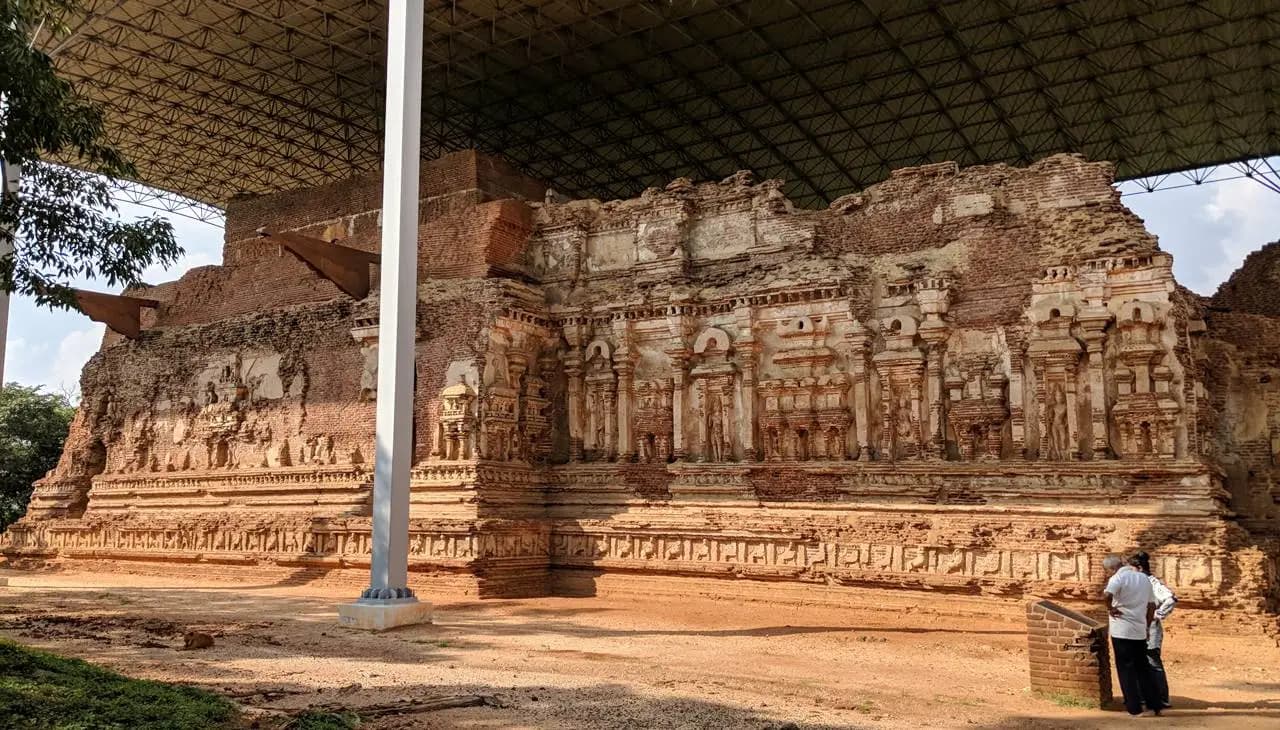
The Tivanka Image House is famous for its rare 12th-century frescoes and the specific posture of its Buddha statue. "Tivanka" means "thrice-bent," referring to the statue's body curving at the shoulder, waist, and knee. While the statue is damaged, the inner walls preserve vibrant murals depicting the Jataka tales (lives of the Buddha), showing distinct artistic influence from the Ajanta caves in India. It is the only structure where such extensive Polonnaruwa-era paintings can still be clearly seen.
Lotus Pond
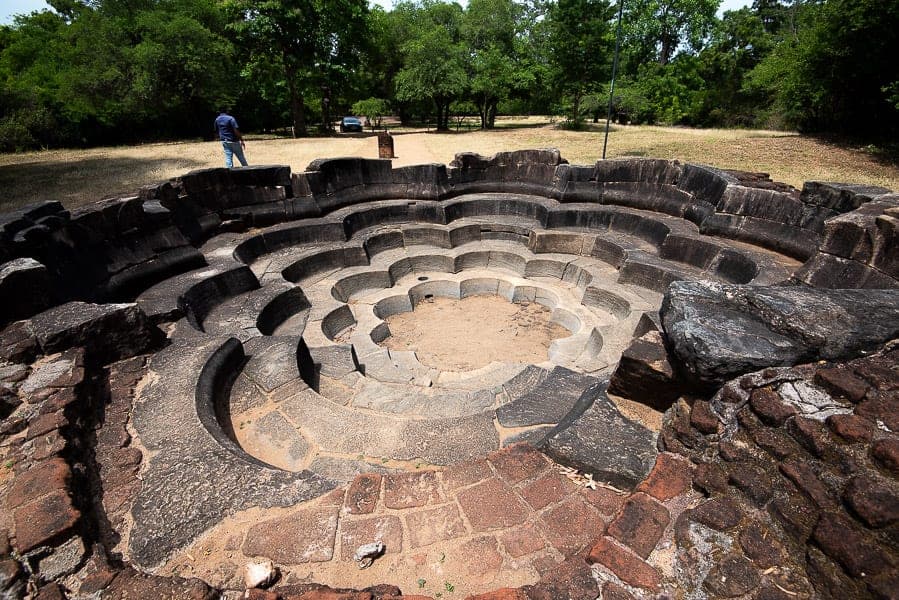
The Lotus Pond (Nelum Pokuna) is a small but exquisitely designed stone bath shaped like a full-blown eight-petaled lotus flower. Built from cut granite, it is often associated with the Jetavana Vihara complex. Though small compared to other tanks, its artistic merit lies in its symmetry and elegance. It likely served the monks of the nearby monastery. It is a fine example of the stone-crafting precision of the Polonnaruwa artisans.
Planning your itinerary in Polonnaruwa? Browse available rooms or get local travel recommendations from our hosts.
Interactive Map
Explore on the Map
Click a pin to view photos and a short description. Use the Translate button to switch between English and Sinhala.