Rankoth Vehera
Discover the history, architecture, and visitor details of Rankoth Vehera in Polonnaruwa, located only a short ride from your sanctuary at ISARA Residence.
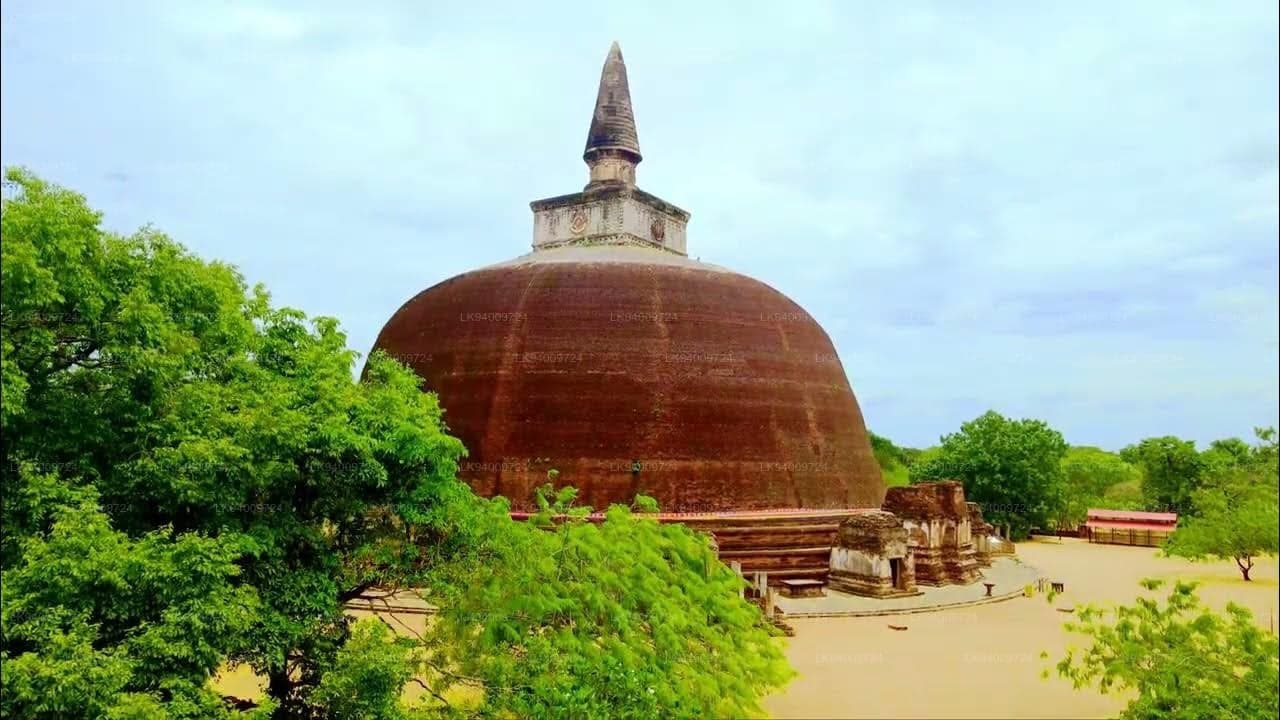
Historical & Architectural Significance
Rankoth Vehera is the largest stupa in Polonnaruwa and the fourth largest in Sri Lanka, constructed by King Nissanka Malla. Modeling it after the colossal Ruwanwelisaya in Anuradhapura, the king named it "Ruwanveli," though it is now known as Rankoth Vehera ("Gold Pinnacled Stupa"). Rising 55 meters high, this brick structure is surrounded by four vahalkadas (frontispieces) and numerous smaller shrines. Inscriptions near one of the vahalkadas record the king's supervision of the construction, seated on a stone platform to watch his work rise.
Travel Times From ISARA Residence
Located 1.0 km from our doorstep in Polonnaruwa, easily accessible via bicycle, tuk-tuk, or car.
By Car / Tuk-Tuk
~3 mins
By Bicycle
~5 mins
Walking
~14 mins
Visitor Essentials & Heritage Etiquette
Tips for a respectful and comfortable visit to Polonnaruwa archaeological monuments
Shoulders and knees must be covered at all sacred Buddhist ruins. White or light-colored attire is respectful and keeps you cool under the tropical sun.
Shoes and hats must be removed before stepping onto elevated stone platforms and stupa terraces. Bring thick socks to protect feet against warm midday stone.
Early morning (07:30 - 10:00 AM) or late afternoon (03:30 - 05:45 PM) offer gentler temperatures, soft golden light for photos, and fewer tour groups.
Never turn your back directly to a Buddha statue when posing for photos. Flash photography is restricted in sheltered mural chambers like Tivanka Image House.
Continue Exploring
More Sites Near Rankoth Vehera
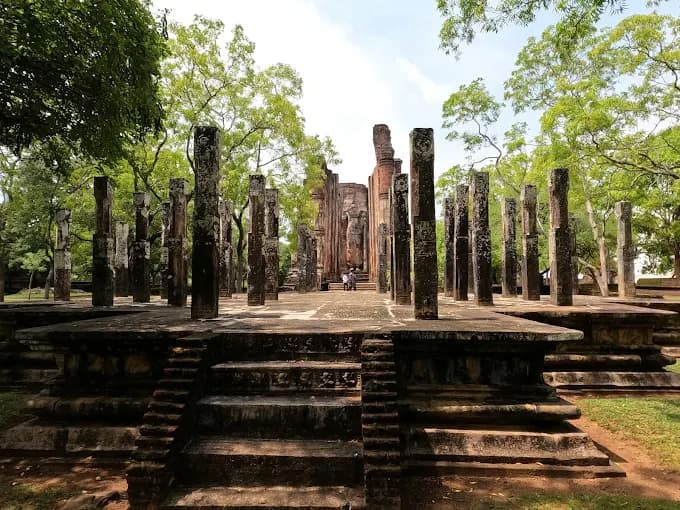
Alahana Pirivena
Spanning over 80 hectares, the Alahana Pirivena was the largest monastic university complex in Polonnaruwa, established by King Parakramabahu I. The name implies "Cremation Monastery," as it was built on ground previously used for royal funerals. The site includes the Lankatilaka, Kiri Vehera, and the Baddhasima Prasada (Chapter House). It served as the center of Buddhist education and discipline, housing thousands of monks in a meticulously planned landscape of terraces and stupas.
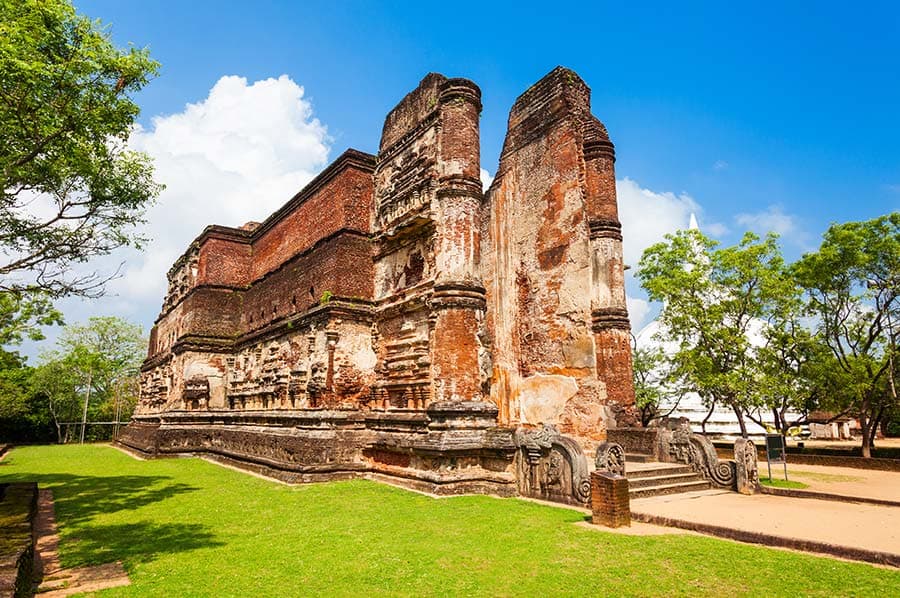
Lankatilaka Temple
Lankatilaka is a massive "Gedige" style image house built by King Parakramabahu I. It is renowned for its towering brick walls, which originally stood possibly five stories high. Inside, a colossal standing Buddha statue (now headless) dominates the narrow aisle. The exterior walls are decorated with elaborate stucco figures of deities and architectural motifs. Even in its ruined state, Lankatilaka evokes a sense of awe, being one of the largest religious edifices of the Polonnaruwa period.
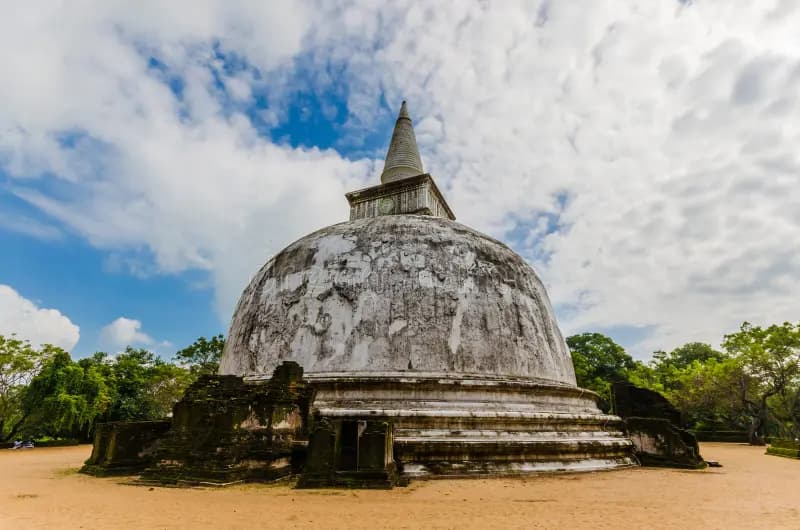
Kiri Vehera (Polonnaruwa)
Kiri Vehera is the second largest stupa in Polonnaruwa and is the best-preserved unrestored stupa in Sri Lanka. It dates back to the reign of King Parakramabahu I and is believed to have been built by his queen, Subhadra. The original lime plaster remains largely intact, giving it a milky white appearance, hence the name "Milk Stupa." It was originally known as "Rupa Vehera." Its pristine condition provides the clearest picture of what these ancient domes looked like centuries ago.