Tivanka Image House
Discover the history, architecture, and visitor details of Tivanka Image House in Polonnaruwa, located only a short ride from your sanctuary at ISARA Residence.
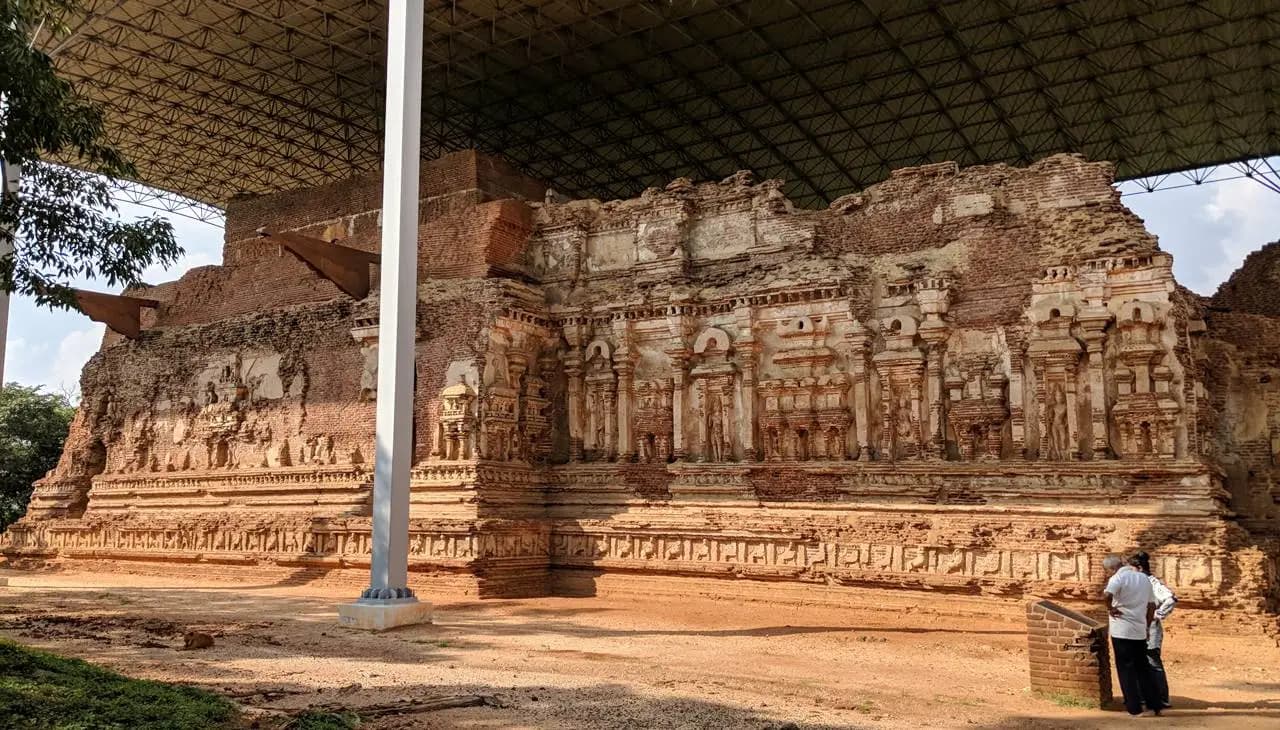
Historical & Architectural Significance
The Tivanka Image House is famous for its rare 12th-century frescoes and the specific posture of its Buddha statue. "Tivanka" means "thrice-bent," referring to the statue's body curving at the shoulder, waist, and knee. While the statue is damaged, the inner walls preserve vibrant murals depicting the Jataka tales (lives of the Buddha), showing distinct artistic influence from the Ajanta caves in India. It is the only structure where such extensive Polonnaruwa-era paintings can still be clearly seen.
Travel Times From ISARA Residence
Located 2.5 km from our doorstep in Polonnaruwa, easily accessible via bicycle, tuk-tuk, or car.
By Car / Tuk-Tuk
~6 mins
By Bicycle
~13 mins
Walking
~33 mins
Visitor Essentials & Heritage Etiquette
Tips for a respectful and comfortable visit to Polonnaruwa archaeological monuments
Shoulders and knees must be covered at all sacred Buddhist ruins. White or light-colored attire is respectful and keeps you cool under the tropical sun.
Shoes and hats must be removed before stepping onto elevated stone platforms and stupa terraces. Bring thick socks to protect feet against warm midday stone.
Early morning (07:30 - 10:00 AM) or late afternoon (03:30 - 05:45 PM) offer gentler temperatures, soft golden light for photos, and fewer tour groups.
Never turn your back directly to a Buddha statue when posing for photos. Flash photography is restricted in sheltered mural chambers like Tivanka Image House.
Continue Exploring
More Sites Near Tivanka Image House
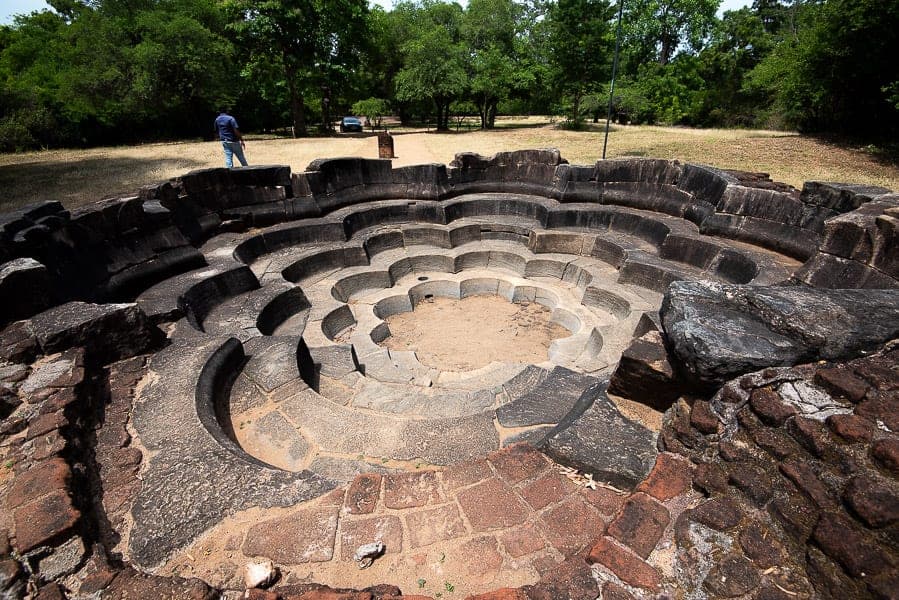
Lotus Pond
The Lotus Pond (Nelum Pokuna) is a small but exquisitely designed stone bath shaped like a full-blown eight-petaled lotus flower. Built from cut granite, it is often associated with the Jetavana Vihara complex. Though small compared to other tanks, its artistic merit lies in its symmetry and elegance. It likely served the monks of the nearby monastery. It is a fine example of the stone-crafting precision of the Polonnaruwa artisans.
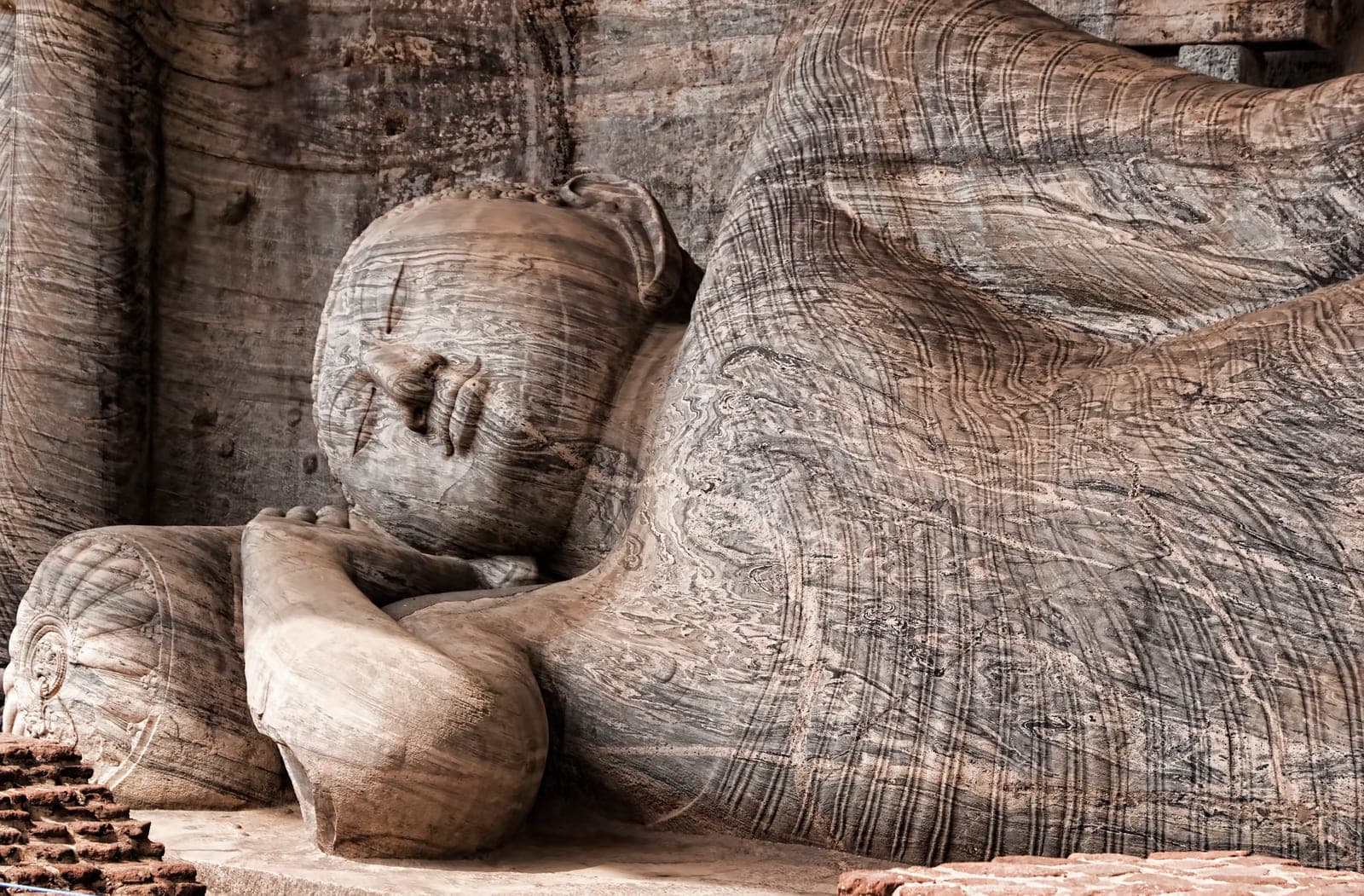
Gal Vihara
Gal Vihara, originally named Uttararama, is the pinnacle of Sinhalese rock carving, commissioned by King Parakramabahu I. The site features four magnificent Buddha statues carved from a single face of granite gneiss: a large seated Buddha in meditation, a smaller seated Buddha inside a cave (Vidyadhara Guha), a standing Buddha with crossed arms (often debated as Ananda Thero, but likely the Buddha himself representing sorrow or enlightenment), and a colossal 14-meter reclining Buddha depicting the Parinirvana. These masterpieces capture profound serenity and are globally renowned for their fluidity and detail.
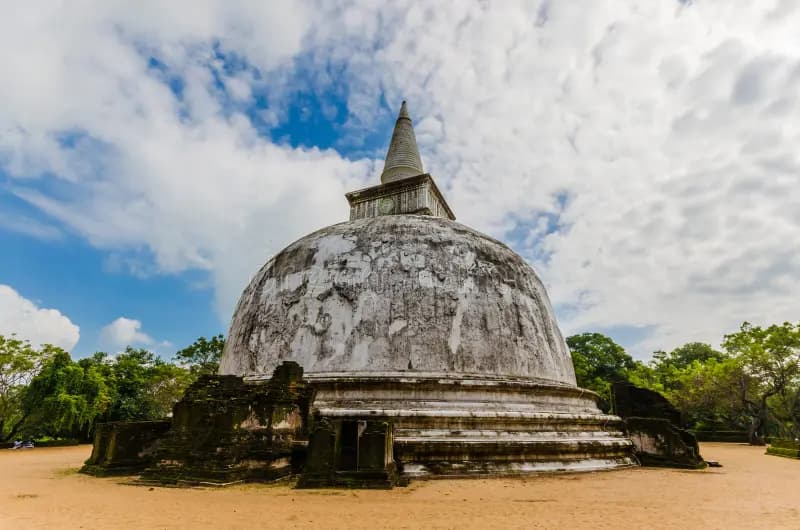
Kiri Vehera (Polonnaruwa)
Kiri Vehera is the second largest stupa in Polonnaruwa and is the best-preserved unrestored stupa in Sri Lanka. It dates back to the reign of King Parakramabahu I and is believed to have been built by his queen, Subhadra. The original lime plaster remains largely intact, giving it a milky white appearance, hence the name "Milk Stupa." It was originally known as "Rupa Vehera." Its pristine condition provides the clearest picture of what these ancient domes looked like centuries ago.