Pabalu Vehera
Discover the history, architecture, and visitor details of Pabalu Vehera in Polonnaruwa, located only a short ride from your sanctuary at ISARA Residence.
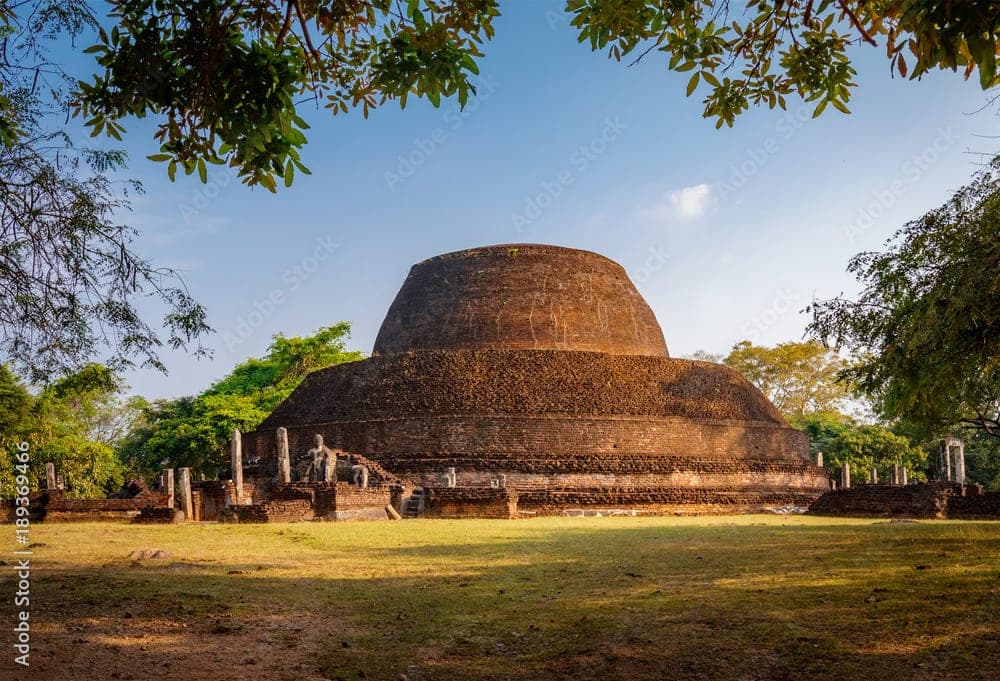
Historical & Architectural Significance
Pabalu Vehera is a stupa traditionally attributed to Queen Rupavati, one of the consorts of King Parakramabahu I. Its name, "Bead Stupa," possibly derives from the many glass beads found in the vicinity during excavations. The structure is unique for its extensive use of brick and its slightly different shape compared to other stupas in the complex. It stands as a testament to the patronage of royal women in the religious landscape of medieval Sri Lanka.
Travel Times From ISARA Residence
Located 1.6 km from our doorstep in Polonnaruwa, easily accessible via bicycle, tuk-tuk, or car.
By Car / Tuk-Tuk
~4 mins
By Bicycle
~8 mins
Walking
~21 mins
Visitor Essentials & Heritage Etiquette
Tips for a respectful and comfortable visit to Polonnaruwa archaeological monuments
Shoulders and knees must be covered at all sacred Buddhist ruins. White or light-colored attire is respectful and keeps you cool under the tropical sun.
Shoes and hats must be removed before stepping onto elevated stone platforms and stupa terraces. Bring thick socks to protect feet against warm midday stone.
Early morning (07:30 - 10:00 AM) or late afternoon (03:30 - 05:45 PM) offer gentler temperatures, soft golden light for photos, and fewer tour groups.
Never turn your back directly to a Buddha statue when posing for photos. Flash photography is restricted in sheltered mural chambers like Tivanka Image House.
Continue Exploring
More Sites Near Pabalu Vehera
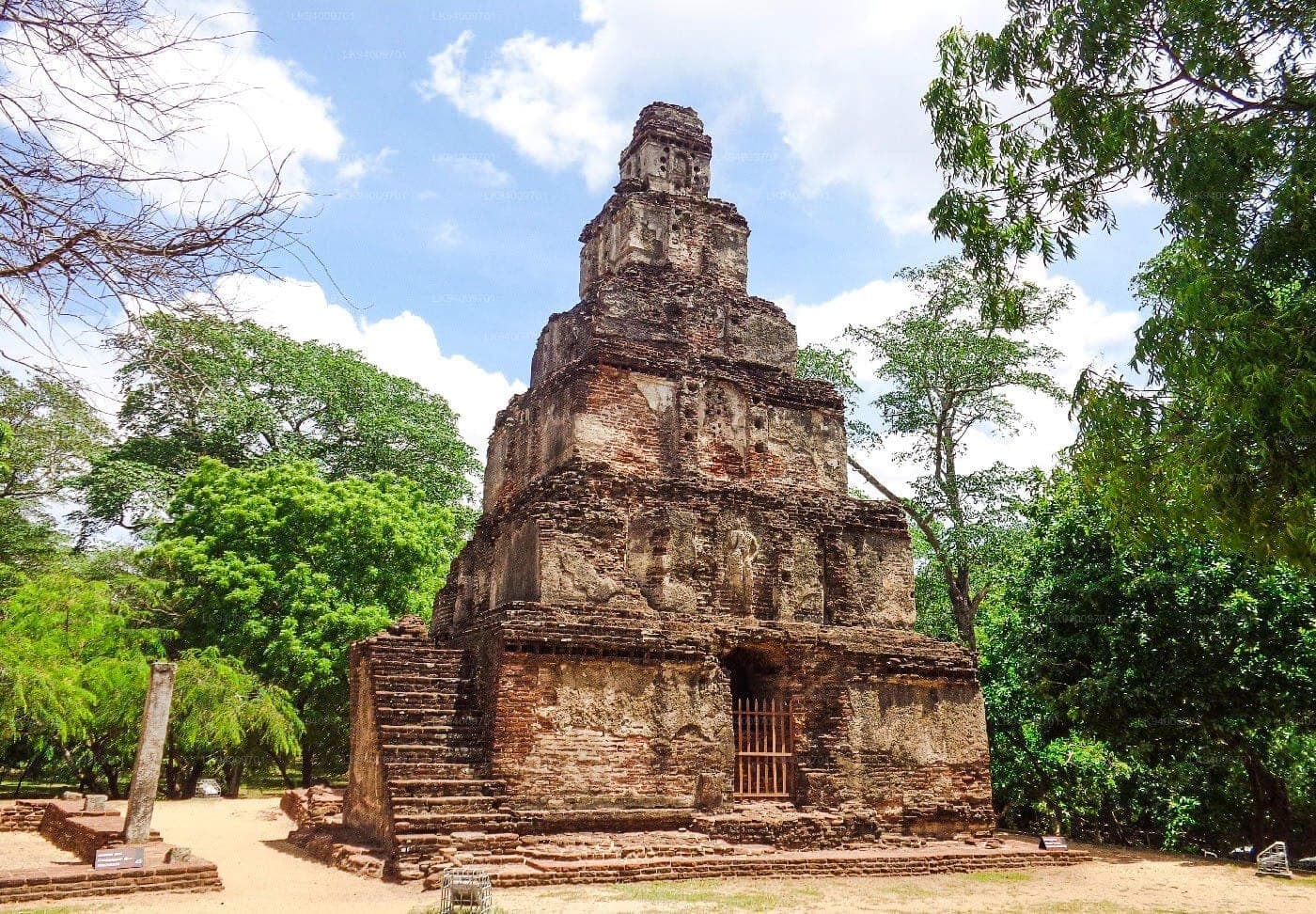
Satmahal Prasada
Satmahal Prasada is a rare seven-storied stepped pyramid located in the Dalada Maluwa sector. Its unusual design differs significantly from traditional Sri Lankan stupas, resembling architectural styles found in Cambodia (Wat Kukut) or Thailand (Wat Cham Thewi). This suggests strong cultural or diplomatic links between Polonnaruwa and Southeast Asian kingdoms during the 12th century. Though its original function remains a mystery, it is believed to be a stupa enshrining relics, with each diminishing story originally adorned with deity figures.
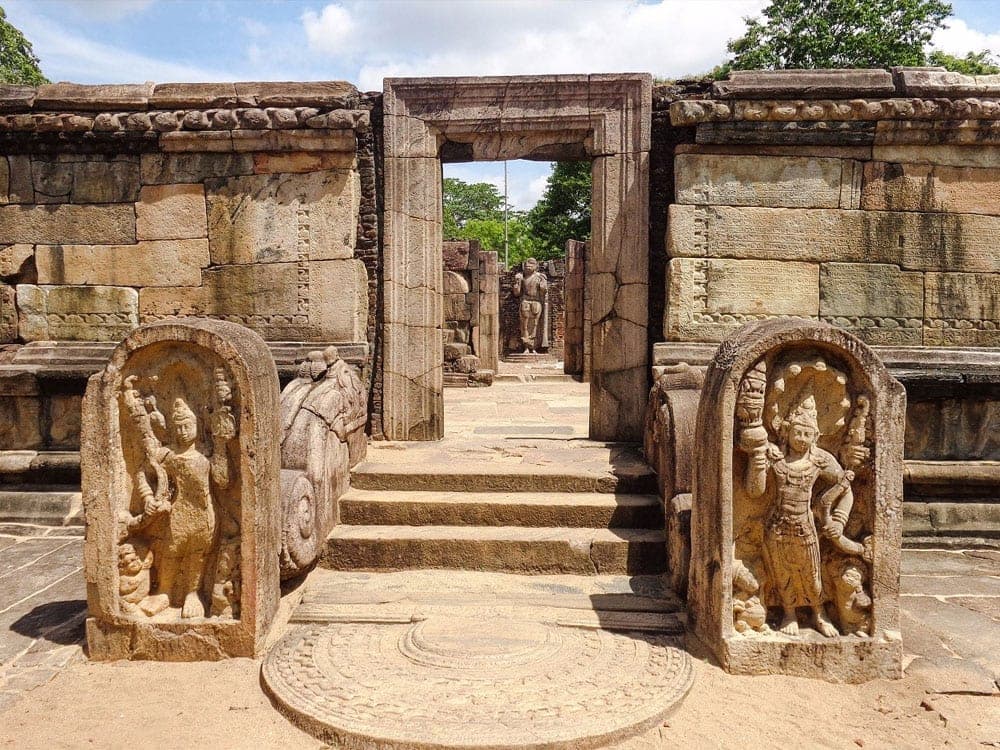
Hatadage
The Hatadage, built by King Nissanka Malla (1187–1196 AD), is an ancient relic shrine named for the tradition that it was constructed in sixty (hata) hours. Located directly opposite the Vatadage, it once housed the Sacred Tooth Relic. The walls consist of massive stone slabs, originally adorned with wood and clay superstructures. Near its entrance lies the "Gal Pota" (Stone Book), a massive stone inscription describing the king's virtues and lineage, further emphasizing the site's historical significance as a center of royal power and piety.
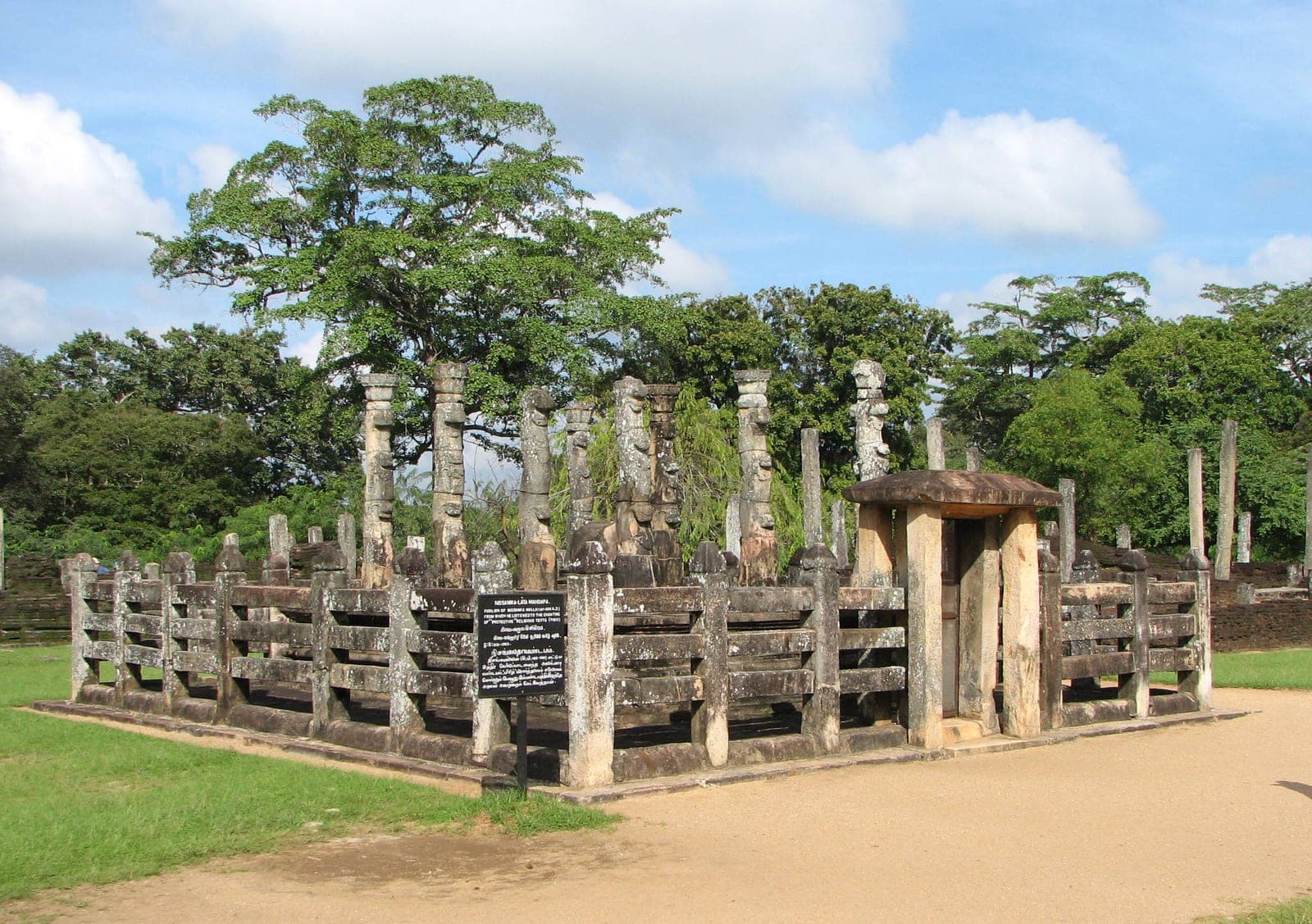
Nissanka Latha Mandapaya
The Nissanka Latha Mandapaya is a unique structure built by King Nissanka Malla for listening to the chanting of Pirith (Buddhist scriptures). Unlike traditional solid columns, the stone pillars here are carved to resemble lotus stalks, swaying gently in the breeze, crowned with budding lotus capitals. This architectural marvel sits within a stone railing and showcases the king's penchant for flamboyant and distinct artistic styles, deviating from the classic Anuradhapura tradition to create something truly ornamental.